
Horror Movies of the 1930s
Discover the chilling world of the horror movies of the 1930s, featuring iconic movies like Tod Browning’s Dracula and Frankenstein, and explore their impact on the genre today.
Introduction
The 1930s was a crucial decade for horror cinema that introduced audiences to iconic characters and enduring themes. It was an era where films became mirrors to society’s fears and desires, shaped by the events of the Great Depression and the shadows of World War I. Monsters and supernatural beings emerged from the fog to explore morality, identity, and the human condition. Notable films such as Tod Browning’s Dracula (1931) and James Whale’s Frankenstein (1931) became cornerstones of the horror genre, showcasing memorable performances and profound narratives.
This article delves into the prominent horror films of the 1930s, examining their origin, characters, and cultural significance, highlighting their legacy in shaping modern cinema.
The Birth of Horror Cinema: Dracula and Bela Lugosi
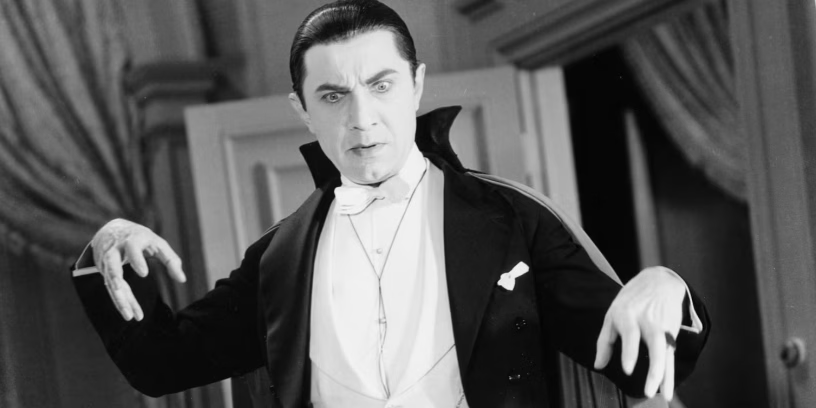
Tod Browning’s Dracula (1931) is often credited with launching the golden age of horror. Starring Bela Lugosi, the film presented a haunting interpretation of Bram Stoker’s 1897 novel. Lugosi’s portrayal became the definitive image of Count Dracula, defined by his theatrical accent and piercing gaze. His famous line, “I never drink… wine,” encapsulates the seductive yet terrifying nature of the vampire, allowing audiences to explore themes of sexuality and fear.
The cultural context of the early 1930s shaped how audiences received Dracula. The film’s exploration of forbidden desires resonated with a society anxious about modernity and the implications of shifting moral boundaries. Browning’s visual storytelling, accentuated by gothic set designs, portrayed an enticing yet terrifying world that would influence countless adaptations and interpretations thereafter.
The Evolution of Horror: Frankenstein and Cultural Commentary
Released shortly after Dracula, James Whale’s Frankenstein (1931) followed another iconic literary figure created by Mary Shelley in 1818. The film diverged from the novel, focusing on the tragic aspects of creation. Colin Clive as Dr. Henry Frankenstein embodies the archetype of the “mad scientist,” driven by the insatiable desire to conquer death. When he exclaims, “It’s alive!” after animating his creation, the tension between ambition and horror comes to a head.
Boris Karloff’s portrayal of the Creature brought empathy to the role, highlighting themes of alienation and societal rejection. The film critiques humanity’s treatment of those who are different, making Frankenstein a poignant study of the human experience amid fears of scientific advancement.
Lesser-Known Horrors: Doctor X and White Zombie
Doctor X (1932), directed by Michael Curtiz, introduced audiences to a unique blend of horror and detective fiction. The film starred Lionel Atwill as Dr. Xavier, an acclaimed cannibalistic doctor. The story revolves around a series of grisly murders that lead to the revelation of the true nature of Dr. Xavier’s experiments. The film’s innovative color sequences and chilling atmosphere demonstrated early cinematic techniques, pushing the boundaries of horror storytelling.
Another key release of 1932, White Zombie, starred Bela Lugosi as the nefarious plantation owner Murder Legendre. It became the first feature-length zombie film and heavily drew upon Haitian Vodou mythology. Lugosi’s performance, alongside haunting visuals, brought a new dimension to the horror genre, paving the way for future depictions of zombies in cinema.
Folklore and Fear: La Llorona and The Invisible Man
La Llorona (1933) encapsulated the Mexican folktale about a grieving woman who drowns her children. Although not directly a Hollywood production, the film introduced audiences to Mexican horror elements, highlighting cultural aspects that would flourish in later decades. The themes of loss and vengeance explored in the narrative reflect the societal impacts of the Great Depression, connecting the film to a broader context.
The use of science fiction elements intensified with The Invisible Man (1933), directed by James Whale. Based on H.G. Wells’ novel, the film follows the story of a scientist who discovers a formula for invisibility. Claude Rains delivered a remarkable performance that explored madness and hubris, encapsulated in key scenes where the invisible figure wreaks havoc, ultimately leading to his tragic downfall. Social commentary about the fear of isolation and the loss of humanity pervaded the film, resonating deeply with contemporary audiences.
Morbid Curiosities: The Monkey’s Paw and Maniac
The Monkey’s Paw (1933), based on W.W. Jacobs’ chilling short story, explores the consequences of tampering with fate. The film centers around a family that acquires a mystical paw that grants wishes but at a dire cost. Each wish leads to tragic outcomes, culminating in the loss of their son, which vividly illustrates the theme of unintended consequences. The narrative functions as a cautionary tale about human greed and the desire for control over destiny, resonating within the broader context of the Great Depression where hope and despair coexisted.
Maniac (1934), directed by Dwain Esper, pushed the boundaries of horror by exploring psychological terror. Billed as a “horror shocker,” the film follows a deranged man, played by actor-director 36The film’s sensational approach to mental illness and crime sparked controversy but remains noteworthy for its early exploration of the disturbing intersections of insanity and horror. The shocking narrative elements and experimental style paved the way for later films to confront similar topics, albeit in ways that would become more refined.
Evolving Monsters: Bride of Frankenstein
Bride of Frankenstein (1935) is often hailed as one of the greatest horror films of all time, brilliantly directed by James Whale. It serves both as a sequel and an enhancement of the original Frankenstein, with Elsa Lanchester’s portrayal of the Bride emerging as one of cinema’s most iconic characters. Her performance, characterized by a haunting presence and striking design, epitomized the era’s fascination with the monstrous feminine.
In pivotal scenes, the Bride’s initial rejection of the Creature sheds light on themes of acceptance and companionship. The tagline, “She’s Alive!” encapsulates the film’s exploration of identity and societal rejection, as it portrays a Creature struggling with the stigma attached to her existence. Lanchester’s iconic image—complete with shockingly stark hair and a bridal gown—has influenced numerous films and remained a lasting symbol within popular culture, representing the complexity of monstrous femininity in horror.
Haunting Visions: The Raven and Werewolf of London
The Raven (1935), featuring Boris Karloff and Bela Lugosi, draws inspiration from Edgar Allan Poe’s poem. This film blends horror with dark comedy, showcasing Lugosi as a deranged surgeon obsessed with Poe’s macabre literature. As the body count rises, the narrative reflects themes of madness driven by obsession and the search for meaning in chaos. The film’s stylistic visual elements and exploration of psychological horror make it a fascinating addition to the genre.
Werewolf of London (1935) introduced audiences to a new type of monster shaped by science rather than folklore. Directed by Stuart Walker, it starred Henry Hull as Dr. Larry Talbot, who grapples with his transformation into a werewolf after being bitten. Unlike previous wolfman portrayals rooted in folklore, Talbot’s affliction symbolizes fears of scientific manipulation of nature. The film explores the horror of losing control over one’s identity, presenting the werewolf as a tragic figure rather than a mere predator.
The Influence of The Golem
The Golem (1936), while not strictly a Hollywood film, had a tremendous impact on the horror genre. Based on the Jewish legend, this film portrays a clay figure brought to life to protect the Jewish community in Prague. It exhibits strong themes surrounding creation, monstrosity, and the consequences of defying nature. The Golem, played by Paul Wegener, becomes a symbol of misunderstood strength, embodying the anxieties of a marginalized people.
The film’s expressionist style and atmospheric visuals provide a unique lens on the themes of power and protection, pressing audiences to reflect on the complexities of identity and fear in a precarious world. The narrative echoes the anxieties of a society grappling with its identity amidst rising tensions in Europe.
Conclusion
The horror movies of the 1930s shaped the genre, introducing iconic characters and enduring themes that continue to resonate today. Films like Dracula, Frankenstein, and Bride of Frankenstein not only entertained but also provoked critical discussions about societal fears, scientific ethics, and the nature of humanity. The decade’s cinematic contributions laid the groundwork for modern horror narratives, allowing filmmakers to explore the human psyche through fear and monstrosity.
As we delve into the legacies these films have created, the call remains for contemporary audiences to engage with the narratives of identity, acceptance, and consequence. The examination of these classic films urges us to consider: How have our fears changed, and what do they reveal about ourselves in the modern world? The influence of these foundational works will undoubtedly inspire the horror narratives of tomorrow.
Read about horror movies of the 1920s here
Find us on X here